About Me


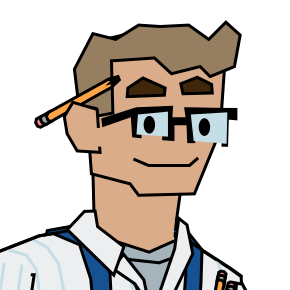
I figure you probably want to see a photo that says I’m real
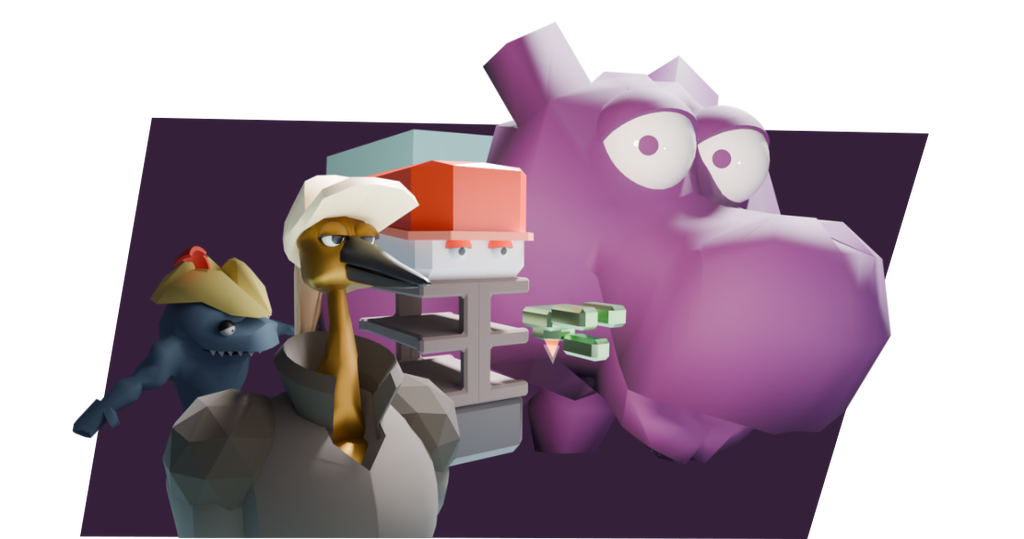
so here’s a candid photo of me alongside my 3D avatar.
Selling a game is hard. Selling a game about enlightenment or whatever? That’s harder…
I’m making a game that teaches you how to be a better teammate and partner. You can learn about it here.
But if you’re someone who is making your own game, you might want to read below. Making this game was such a tricky sell, that I had to go on quite the journey to understand how to create characters who write the game’s story for me.

Characters who make it easier to promote your game.
Characters who might be the difference between whether all your hard work goes to waste, or if people play your game, love it, and have to tell their friends about it.
I make no guarantees yet, but this is what I’ve learned so far…
The Lumberjacks Who Made Me Cry
I don’t finish many video games, because I started out strong: The first game I ever finished was The Legend of Zelda A Link to the Past. I can still hear the victory music for the credits sequence.
I was not very good at most games, so finishing a game had been out of the question, until Zelda. But the story world was compelling enough that I felt a real need to set things right!
By the time I found the twin lumberjacks, I had gotten a handle on the game. I wasn’t confused about how to move around anymore, so I could focus on the game’s implied story world.
I don’t remember thinking much of the lumberjacks at the time, because they were just two guys sawing a tree down, why should that be memorable? I’m on the hunt for loot, I’ve got to get more hearts so I don’t die as easily during the boss fights!
But eventually I did succeed in those boss fights and advanced the story.
I advanced the story so far that despair was able to come over the entire game world… and the lumberjacks… were gone.
Instead of the lush green world I had gotten used to, the world was a sickly color, a dried out version of itself.
There were no longer any happy lumberjacks, just a dried out tree.
-Though the tree did have part of a heart in it… so I was in fact stronger now…
But does the pursuit of power mean everything? It was important (since I was bad enough at games that I did need every optional power-up if I was going to keep going) but as I had gotten further into the game, and more comfortable with the controls, I now felt a sense of investment growing inside of me.
I was invested in this world. And I didn’t like that the lumberjacks were gone…
It was a hard game for me to beat, and I did have enough trouble that I had to use one of the 90’s most forgotten tools (a physical book that told me how to beat one of the dungeons’ puzzles) but I managed to beat the game, and I can still hear the music that played.
The game’s ending was a fairytale, happy ending, and it showed the player all the good they had done in the world.
I’d needed all the optional power-ups to beat the game, but finally their secret purpose was revealed: like some sort of Aesop fable, I had spent so much time going around looking for all of the hearts and sword upgrades, that I knew every character in the game now. Seeing how everyone was getting their ‘Happily Ever After,’ filled me with a warmth that has been my guiding star in my own game design career.
From time to time, I may make a game 180 degrees in the opposite direction (horror) but when possible, I want to create games that allow the player to feel like they got the chance to set the world right. And though we did mend things by banishing the magic that had plagued the world, often that victory starts in the simple objects, like a tree that became a stump, and broke my heart a little bit as the game progressed.
The Toilet Paper Which NOW Makes Me Cry
The friend who introduced this next game to me, has now passed, and so I experience this memory twice: Once as it was for years, the game design principle it instilled in me, and a private second time that has more to do with not getting to share my eventual games with this person.
The Legend of Zelda: A Link to the Past was a Super Nintendo game, and I made it my life’s mission to get a Nintendo 64. I was able to play The Legend of Zelda: Ocarina of Time, the year it came out, -and while that certainly has been a cherished memory to look back on, Zelda 64 felt like fool’s gold (just to me personally; I’m not saying this other game is better) compared to Final Fantasy 7.
I was over at my late friend’s house and got to play Final Fantasy 7, my first full roleplaying game.
Zelda games were hard for me, but if I stuck with them long enough, I could get all the power-ups and manually (effectively) lower the difficulty of the game down to my level so I could beat them.
I hadn’t gotten my N64 for Ocarina of Time, I’d gotten it for a game called Quest64 which was my first encounter with Experience Points. Finally a game where you could just grind out fights with monsters, and become stronger and stronger, until the game was easy.
But Quest64 had a forgettable storyline.
Was there no way to have both?
Final Fantasy 7 said it had everything I needed: Grind your way to more XP and access the full game’s story.
And what a story it was.
-Rather, the world-building was wonderful to see. (I still can’t tell you the entire story of FF7, so much of it is lost on me.)
I didn’t appreciate at the time, how much I loved being up against corporate overlords, but we had magic and wonder on our side! And an airship! (I loved the airship so much, I figured out a way to build a LEGO version.)
But there was a moment in the game, early on, that changed something in my brain. And this change has been with me in my game design ever since. You were in ‘the bad part of town,’ because you needed to save your friend. I’d wished it was under nicer circumstances, because I love a busy city area; there were so many interesting characters to meet!
You’re basically given a puzzle to solve, in the form of fetching all these different items to make a disguise to get into where your friend is being held.
And this part of games I am to this day still terrible at: Puzzles. I find it hard to follow most game designers’ logic and do whatever it is they are asking me to do. Unless the game is built around one puzzle, and it’s designed to make you think through that puzzle, I never catch on to what the puzzle-makers were thinking.
Which is why me and my friend spent a lot of extra time in this part of town, going over every object, trying to see if it was interactable.
-Back then, you couldn’t have a fully 3D game unless it was full of chunky polygons, so Final Fantasy 7 was made by creating sort of ‘matte paintings’ in a technique sort of like they used in film special effects, to make it seem like you were walking around a real 3D world, when in fact you were walking around on a still image designed to trick you into feeling real.
One of the things we ran into was toilet paper. Rolls and rolls of it. (Or maybe it was a reasonable amount of toilet paper, but our minds were blown that a video game would have something so vulgar at all.)
I remember one of us saying to the other, “We can’t click on this, but someday, games are going to let us interact with everything.”
And in a few short years (which felt like a long time back then) we had Oblivion and Havok physics, and if you could see an item, you could pick it up and read something about it. -And about ten years after that we’d get Dark Souls which taught me that you can then take the items you place in the game and make really meaningful choices about why those items are there, who placed them there, and you can give that information to the players in fun ways through the pick-up items’ flavor text.
But because my first interaction with this concept of making really meaningful pick-up items… was with some rolls of toilet paper… I often err on the side of making things which (while still being meaningful) are a bit wonky and light-hearted.
-But you’ll always see me trying to find the ways to make the pick-ups have some relation to the beloved characters of the game, because though an object might be interesting, usually the truly interesting trinket is someone’s item; the ownership is where the meaning comes from. A character obtained and protected this item over others: Why? And what does that tell us about that character, and the game-world itself?
Whenever we can get a clearer picture into the characters’ worlds, I’m going to look for it, because it’s my argument that loving the characters means loving the game. (Even when the game itself might have some problems.)
The Confusing Game With A Clear Message About Friendship
-Clear might be overly-generous. Kingdom Hearts as a franchise can basically be boiled down to the phrase: “FRIENDSHIP GOOD” but it’s still a story (however mixed up and messy that story was) where I felt like we were bridging out of the “ALL ACTION ALL THE TIME” genre of storytelling, and finding some of the softer moments of human experience.
Kingdom Hearts suffers from a structural problem, where it has prequels about its prequels, and writing a story backwards is much easier to mess up than writing a story forwards, but they were onto something important: it is worth knowing about the life lived by those we love and care about.
The moment this crystalized for me wasn’t even during a day where I was playing the game. Kingdom Hearts generated a great deal of fanart and fanfiction, and it was while I was reading a fan-made comic of some of the Kingdom Hearts villains all living in the same house together that I had my realization.
I wasn’t expecting to have any big ideas when I sat down to read this comic, I was just happy to have more story. Though I was not attached much to these characters while I’d encountered them in the game, I’d loved the way the fan community had noted the differences in the characters’ personalities, and expanded their interactions into a much more comedic -yet far richer experience of their story.
I didn’t know I was reading a comic that would revive the series for me, I just knew I didn’t care about many comic strips, but I was impatient about this comic coming out. When would the author release more strips? Had I seen all of them? Were there ones on another site maybe it seemed?
I was desperate to see these characters living out a slice of life, without the immediate threat of the end of the world. -It would be years before I heard the term and now genre ‘Slice of Life,’ but I felt that day in my heart as I refreshed and refreshed trying to get more of the simple, low-stakes story, that I understood something about character writing for video games:
We don’t just need stories where we get to see our favorite characters living ‘Happily Ever After,’ we need stories about the characters we love, while they’re living happily.
If you haven’t read about how I got started making the game I’m working on, you can learn about my struggles with finding ways to have happy characters who treated one another well… but there was still somehow enough conflict to drive the story forward.
I was so moved by seeing the (canonically) villains being good to one another, that for a very long time, I missed out on the ease of having a very good antagonistic force to drive the larger plot forward.
The Villain Who Teaches You (And Then Tries To Kill You)
I said before that I have trouble with puzzles in games, UNLESS the entire game is built around teaching you how to think about that puzzle, the way Portal spent a great deal of time teaching the player its mechanics, before letting the player loose in the deeper world there was to explore.
People who don’t play games have told me they know who the villain of this game is, so it seems like it’s probably okay to talk about Portal’s twist. -Though I apologize if you were someone who wanted to experience the twists of Portal unspoiled, but I’ll try to speak with just enough vagueness that you could still have a good twist experience once you play.
Portal has a villain who is very very greedy, and wants a specific thing from you, the player character, and once its obtained, you have no more value, and you are seen as disposable.
That’s how to write a villain.
It took me years to understand how simple writing a villain is:
You really do just need to think of people who you hate, who you hate them because they are willing to steal and cheat those around them, for their own gain.
Audiences love to see a haughty jerk brought back down.
I’ll link this again at the end of this page, but if you want to get started on the tips I have for writing your own stories, the headline is: Just Do A Robin Hood.
(If you want it right now, and if you’re willing to accept that it is a bribe of sorts, because it costs no money but it is an email sign up thing: click here.)
Write a story where the villains have overreached and stolen stuff that is not theirs, and they don’t feel guilty about it, so the player can steal back their riches, and redistribute the resources to the poor characters of the game.
And if you really want to make the villain memorable, give them an admirable dimension.
The villain in Portal clearly needs to be brought down. I remember realizing how overreaching the villain’s power was, and how things would get worse if left unchecked. And though there was some jumping and aiming that made Portal hard for me (and timers! why is it always timers!), I was determined to save the day, even if I had to keep dying and reloading.
But before you reach the moment of wanting to fight the villain to the end, the villain was helpful to you…
The villain was very very smart and if you’d removed the villain entirely, the game would have been a lot more trial and error.
So let your villains have some nice qualities, some things the player would admire about them- just make sure to give them far more greed than that, and the player won’t have to think twice about bringing them down.
But the problem with greed is that you can’t just say the villain is greedy, you sort-of need to show the villain taking advantage of the characters of the world- you don’t even have to show the characters being taken advantage of, so long as the player can understand:
Characters just like my character, will have a bad time, until somebody takes care of that boss.
The Game That Made Me Take, “Video Games As A Medium” Seriously
I will tell you this story in reverse:
I stopped playing Mass Effect 2 at the point where two characters on my team got into a fight, and I was unable to get them to see reason, so the game forced me to pick a side, and then the other one would storm off.
I hated this moment in the game. I had been loving Mass Effect 2 up until this point. I was terrible at shooter games, but Mass Effect 2 had added a new difficulty, even easier than easy: Casual. Playing on casual difficulty, combined with playing the class that was most focused on having good armor to survive in, I was able to play and beat Mass Effect 2 no problem.
-Except there was a problem! It just wasn’t a difficulty problem. And I didn’t finish Mass Effect 2 on that playthrough!
Because what the heck was this game trying to make me feel, here?
There had been a way that I could get both characters to see reason, but I hadn’t ‘played the game right,’ up until that point, so the option was unavailable to me.
If you had ‘played right’ you’d only ever pick the option that equated to “Jedi Mind Trick” in dialog options, until you had enough points to bend people to your will. -And this was the second game in the series, so it was expecting you to Mind Trick your way all the way through the first game too!
For difficulty reasons, I’d had to skip that first game because it was too hard!
Filled with revenge and vigor, I brute-forced my way through that first game, and took every option the game gave me to ‘train up’ my ‘negotiation’ skill.
But this dialog system in Mass Effect spurred me to become a game designer specializing in characters because this gameplay was nothing like the skills we need in the real world for dealing with our conflicts with one another.
EARLIER in Mass Effect 2, I’d actually experienced a GREAT example of using the story to talk about character conflicts, which is why I want to end on it.
I had landed on one of the most beautiful cityscape planets I’d ever set virtual-foot in. It was the spaceage city of one of the galaxy’s most senior species.
One of the characters remarked that even though this world seemed bright and welcoming, it was actually just as dangerous as the back-alley grungy planet we’d come from that’d had no laws. Here, there was a different kind of lawlessness, in the form of everyone basically being a lawyer so they all bent the many many many laws to their whims.
I was having a great time. Because this was Planet Lawyer, there was a lot of money on this planet and it was one of the parts of the game with a bunch of new shops. See above where getting the powerups so I could not-die was a very big motivator for me.
But part-way through this city, I ran into a scene that took me completely by surprise, and changed the course of my life.
Now remember: I had not yet played Mass Effect 1 because it was toooo hard for me, so there were a few times where I ran into events that were based on things the characters had done in the previous game. So when this woman yelled at me out of nowhere, I was not sure what I’d done or if I’d deserved this treatment.
She explained to me that her grown daughters had been living on the giant space station that had been the site for the final boss in the first game. (I didn’t know the context then, but I’ve played the game since.)
They were on the space station that had gotten attacked, and they’d died.
Mass Effect 2 was not just a big step forward for me as someone trying to get through a shooting game that was hard for me, it was also a game that forced me back into the gamer cycle of needing to get new hardware. One of the things I’d needed to even play this game, was a new graphics card that could add real-time effects to the game not yet seen in previous eras of gaming. Once again, I must ask you to remember that I come from the polygon and pixels era, that one thing you must remember, or nothing that follows will seem wondrous:
I’d assumed I’d needed this fancy graphics card upgrade to get shinier bullets, or bigger explosions (and maybe that was also true).
But I was now looking into the fictional face of a grieving mother, whose lower eyelids were damp. They actually reflected the light differently than a person’s face would normally, and I could tell that she was tearing up, with the strained/inflamed lower eyelids of someone who was in real emotional distress.
I was hooked.
Video games were going to be for adults now, I could feel it.
Video games were a worthy pursuit for my life’s work.
All I needed to do was figure out how to make audiences feel things, the way Mass Effect 2 managed to get me to feel things.
And hopefully it wouldn’t take… like a decade and a half…
Wherein It Took Like A Decade And A Half…
I talk about my journey to write games that make you laugh and make you cry, over here.
But if you’re not ready to go exploring yet, I’ll give you the short version:
The Gottman Institute in Seattle studies marriages, and they study them over years and years; some of their studies follow couples for more than a decade.
They’ve applied the scientific method to pick apart the fine details of why some marriages stay together, and why some marriages fall apart.
They now have such a fine-grain understanding of what the happy couples have in common, and what is the common cause of the couples that got divorced, that they can watch you for something like 3 minutes (so long as it’s the specific 3 minutes they need) and give you a 90+% accuracy of whether you will get divorced, and if you stay together, whether you’ll be happy in that marriage or not.
These people know what’s going on, and my work as a writer finally came into focus when I heard this statistic from them:
69% of the fights couples have (even the happy ones who stay together) are going to keep coming back up, year after year- not because they are with the wrong person, but because there is no ‘right’ person for anyone, just righter persons. Everyone comes with tradeoffs. No one was made for us.
The happiest couples were people who managed to love one another, even though they also couldn’t stand the decisions the other made.
Mass Effect 2 was right about one thing. When they gave me this fight between my party members, it was based in the reality that these two characters were going to fight about their differences.
I just knew (though I couldn’t articulate it at the time) that there must also be ways for the characters to have those fights, AND be adult about the fights. Come back together at the end. They don’t come to agreement…
But they can come to understanding.
Our characters will not agree with one another about everything, but they can all still get along with one another despite being locked into forever-fights with one another.
And that can lead us not only to ‘Happily Ever After’ endings, but stories in which we get a little slice of these characters’ lives along the way. Fights that don’t have to end in betrayal, but which are never fully resolved either.
The fights, the conflicts, are just one more way that we come to understand how every person is reacting to life in a different way, and that’s what keeps life from being boring. -Those differences are also what make life so unbearable, but I like what Victor Frankl said in the original German title of his book, which was about: “Saying Yes To Life, In Spite Of Everything.”
That’s what I’ll be adding to my own stories, and if you’d like to work together, I can add a lot of characters saying yes to life, and a LOT of everything for that saying yes to be in spite of.
In the meantime, if you’re willing to sign up for emails that I may send in the future, you can have my cheatsheet titled “Just Do A Robin Hood” for the various tricks I use when helping someone build their game’s story.
We can always deviate from these tricks, these are simply the options I’ve found for lowing the difficulty of the storywriting process. (And if you’ve made it this far, you know how much I like to make things easier when possible.)